A very few men are smiths, making silver or gold ornaments, repairing guns, kettles, saddles, etc. ; but the best silversmiths are found in the lamaseries
The land of the Lamas: notes of a journey through China, Mongolia and Tibet, William Woodville Rockhill, 1891.
Silver Saddlery Ornaments
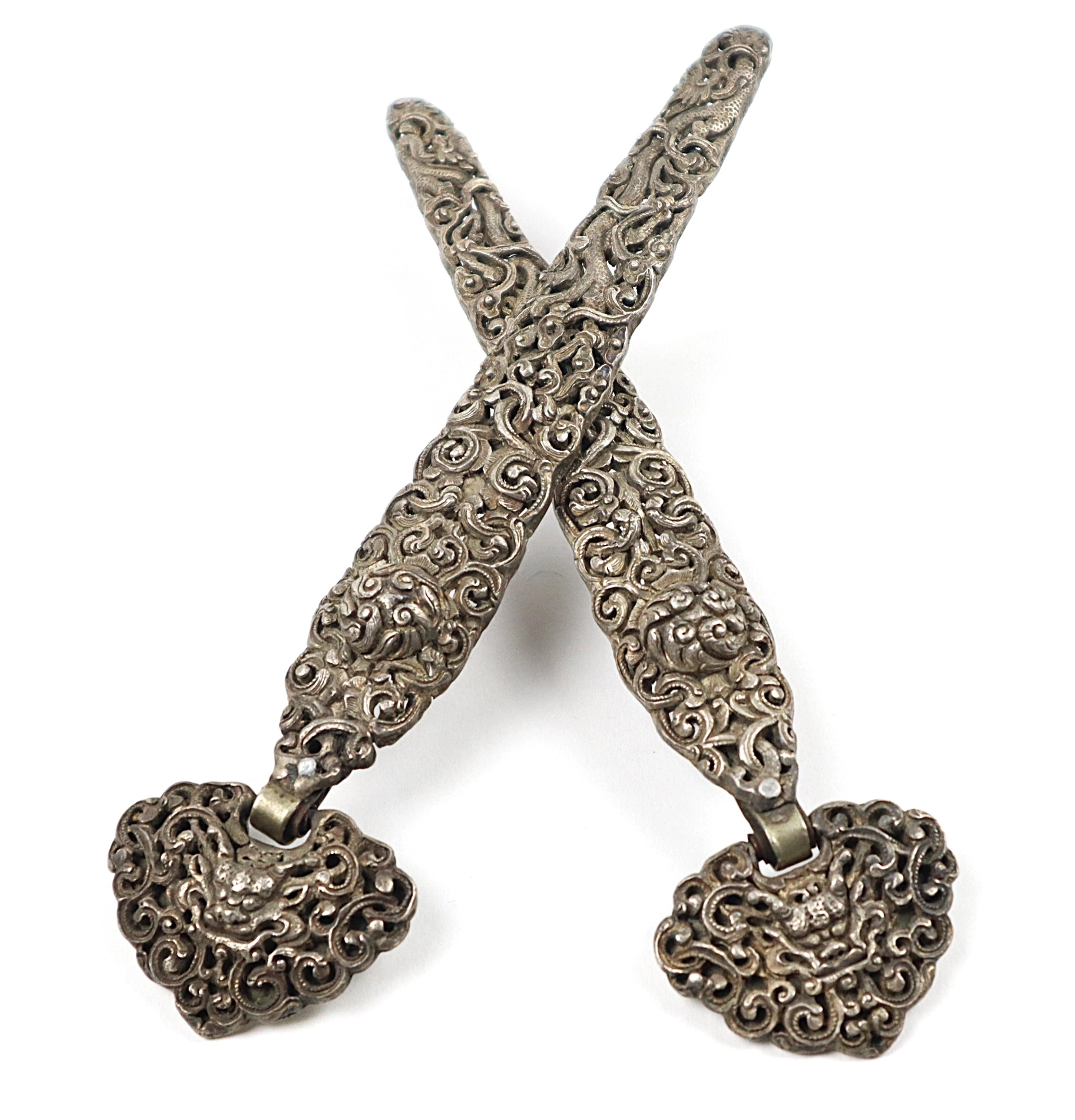
Country of origin : Tibet, Derge, Kham
Dating : 18/19th century
Materials : Silver
Total length : 23.5 cm
The city of Derge ( སྡེ་དགེ ), located in present-day Sichuan Province, China, was once the central town of the Kingdom of Derge, nestled in the eastern part of Tibet, the Kham region. The city was renowned as a center of crafts, particularly for its printing and the production of a wide variety of bronze, iron, silver, and gold objects.
William Woodville Rockhill, in The Land of Lamas, describes the town as follows:
" Derge est spécialement connu, dans tout le Tibet, pour l'excellence de son travail du métal. Les sabres, fusils, pots à thé, poudrières, sceaux, cloches, etc... fabriqués ici atteignent des sommes importantes lorsqu'ils sont offerts à la vente ; leurs selles sont aussi les meilleures du Tibet de l'est, celles de Litang prenant la seconde place. J'ai un grand nombre d'objets en métal provenant de Derge, qui seraient attribuables à n'importe quel ouvriers, mais j'en ai vu certains d'une extrême finesse artistique et au rendu parfait. "


Please, do not hesitate to contact us if you would like more photographs or information.